The wait is almost over! We are just weeks away from the biggest and most expansive sporting event in history. The 2026 FIFA World Cup isn’t just a tournament; it’s a continental takeover. For the first time, 48 nations will battle across three host countries, Canada, Mexico, and the USA in a massive 104-match marathon
Here is everything you need to know to get ready for kick-off on June 11, 2026.
The Road to 2026: Qualifications
The path to North America is finally paved. With the World Cup 2026 qualification cycles officially concluded in March 2026, we now have our complete field of 48 nations. This expanded format has not only heightened the drama but has also rewritten history, welcoming back old giants and introducing new faces to the world stage
The Final Pieces
The drama reached its peak in late March 2026 during the Intercontinental Play-offs.
| European Slots | In the final UEFA play-offs, Sweden, Türkiye, Czechia, and Bosnia and Herzegovina all fought through a brutal bracket to book their flights to North America. |
| Iraq | The “Lions of Mesopotamia” claimed the final spot on the very last day of qualifying, defeating Bolivia 2–1. |
| DR Congo | Les Léopards secured their place with a 1-0 victory over Jamaica, courtesy of a historic extra-time winner. |
The Hosts: Home Field Advantage
For the first time, three nations share hosting duties. While they skipped the gruelling qualification process, the pressure is immense as they prepare to defend their turf:
| Mexico | Looking to make the Estadio Azteca a fortress once again. |
| Canada | Aiming to build on their rising “golden generation” in front of home crowds in Toronto and Vancouver. |
| USA | Carrying the highest expectations in their history, with a squad now entering its peak years. |
Historic Returns: Ending the Drought
The World Cup 2026 is a homecoming for several nations that have been absent from the global stage for decades.
| DR Congo and Haiti | A poetic return for these 2 nations, who have broken a 52- year curse, when they last appeared at the 1974 World Cup. |
| Iraq | After decades of near-misses, the “Lions of Mesopotamia” are finally back after last appearing in the ’86 edition. |
| Norway, Scotland and Austria | These nations last appeared at the World Cup 28 years ago when they qualified for the 1998 edition. |
| Turkiye | The 2002 bronze medalists return for the first time in 24 years since their memorable run in Korea/Japan. |
The Debutants
The expansion to 48 teams has opened the door for four nations to make their World Cup debut.
| Uzbekistan | The “White Wolves” finally broke through by dominating the AFC rounds. They make their debut in Group K against Colombia. |
| Jordan | Proved they belong among the elite, Jordan secured a spot in Group J alongside the defending champions, Argentina |
| Curacao | The ultimate underdog story. Representing a population of just 150,000, they are the smallest nation in this edition, qualifying through a clinical CONCACAF campaign |
| Cape Verde | The “Blue Sharks” have been rising in the African rankings for years. They finally clinched their spot and will face Spain in their historic first match. |
The Big Misses
While the expansion to 48 teams was designed to be a “safety net” for the world’s footballing giants, the FIFA World Cup 2026 qualification cycle proved that no one is truly safe. Several traditional powerhouses found themselves on the wrong side of history.
Here are some of the biggest names that will be missing out from this edition:
| Italy | The Azzurri have failed to qualify for their third consecutive World Cup. The four-time world champions and winners of Euro 2020 were beaten by Bosnia and Herzegovina. Italy becomes the first former winner to miss three straight finals. |
| Nigeria | Africa’s most populous nation and a formidable side. The Super Eagles campaign was plagued by inconsistency, eventually eliminated in the African play-offs by DR Congo on penalties. |
| Cameroon | Known as the “Indomitable Lions”, Cameroon’s absence is a major blow to the tournament’s vibrancy. A combination of internal federation drama and a gruelling CAF qualification group saw them finish behind a surging Cape Verde. |
| Denmark | After a stellar run in the last few major tournaments, Denmark’s “last dance” for many of its veterans ended in tears. The Danes were edged out in a tense UEFA play-off by Czechia when they lost on penalties |
| Chile | The “Golden Generation” that won back-to-back Copa Américas has officially reached its sunset. Chile finished bottom of the CONMEBOL standings, struggling to find the back of the net with less than 10 goals scored. |
| Other Notable Absentees | Poland, Hungary and Paraguay. |
The Venues: 16 Cities, 3 Nations
A total of 16 venues will play host to the matches of the World Cup, held between June 11 and July 19, 2026, across USA, Mexico and Canada. The opening match of the World Cup will be held at the historic Estadio Azteca in Mexico City, with hosts Mexico taking on South Africa. The final will be held at MetLife Stadium (New York/New Jersey) on July 19.
The Groups
Traditionally, the World Cup comprises of 32 teams divided into 8 groups. However, this time the expansion to 48 teams has changed the math. There are now 12 groups, where the top two from each group and the eight best third-placed teams will advance to a brand-new round of 32.
Here are the World Cup 2026 groups:
| Group A | Mexico, South Africa, South Korea, Czechia |
| Group B | Canada, Bosnia and Herzegovina, Qatar, Switzerland |
| Group C | Brazil, Morocco, Haiti, Scotland |
| Group D | USA, Paraguay, Australia, Türkiye |
| Group E | Germany, Curaçao, Ivory Coast, Ecuador |
| Group F | Netherlands, Japan, Sweden, Tunisia |
| Group G | Belgium, Egypt, Iran, New Zealand |
| Group H | Spain, Cape Verde, Saudi Arabia, Uruguay |
| Group I | France, Senegal, Iraq, Norway |
| Group J | Argentina, Algeria, Austria, Jordan |
| Group K | Portugal, Congo DR, Uzbekistan, Colombia |
| Group L | England, Croatia, Ghana, Panama |
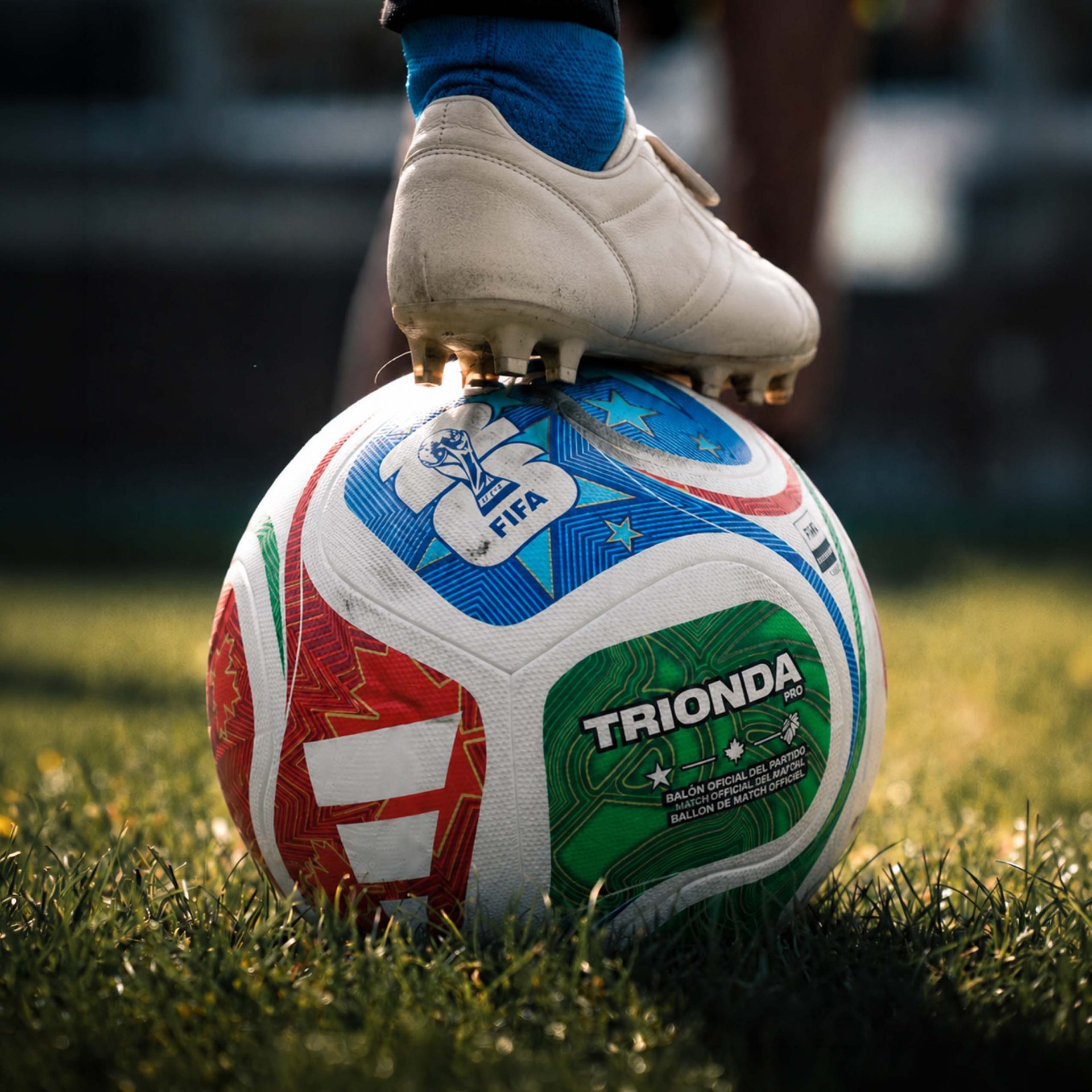
The Official World Cup 2026 Ball: Adidas Trionda
Unveiled in late 2025, the Trionda is designed to handle the diverse climates of North America, from the humidity of Miami to the thin air of Mexico City.
Its name combines the English word “tri” (for the three hosts) and the Spanish word “onda” (meaning wave), celebrating the “triple wave” of Canada, Mexico, and the USA.
The ball stands out with a bold red, green, and blue design and a unique four-panel build, the fewest ever used which helps it fly straighter and smoother through the air. On the inside, it’s packed with smart sensors that talk to the referees in real-time, making sure every offside call and out-of-bounds play is caught instantly and accurately.
The Official Emblem: “WE ARE 26”
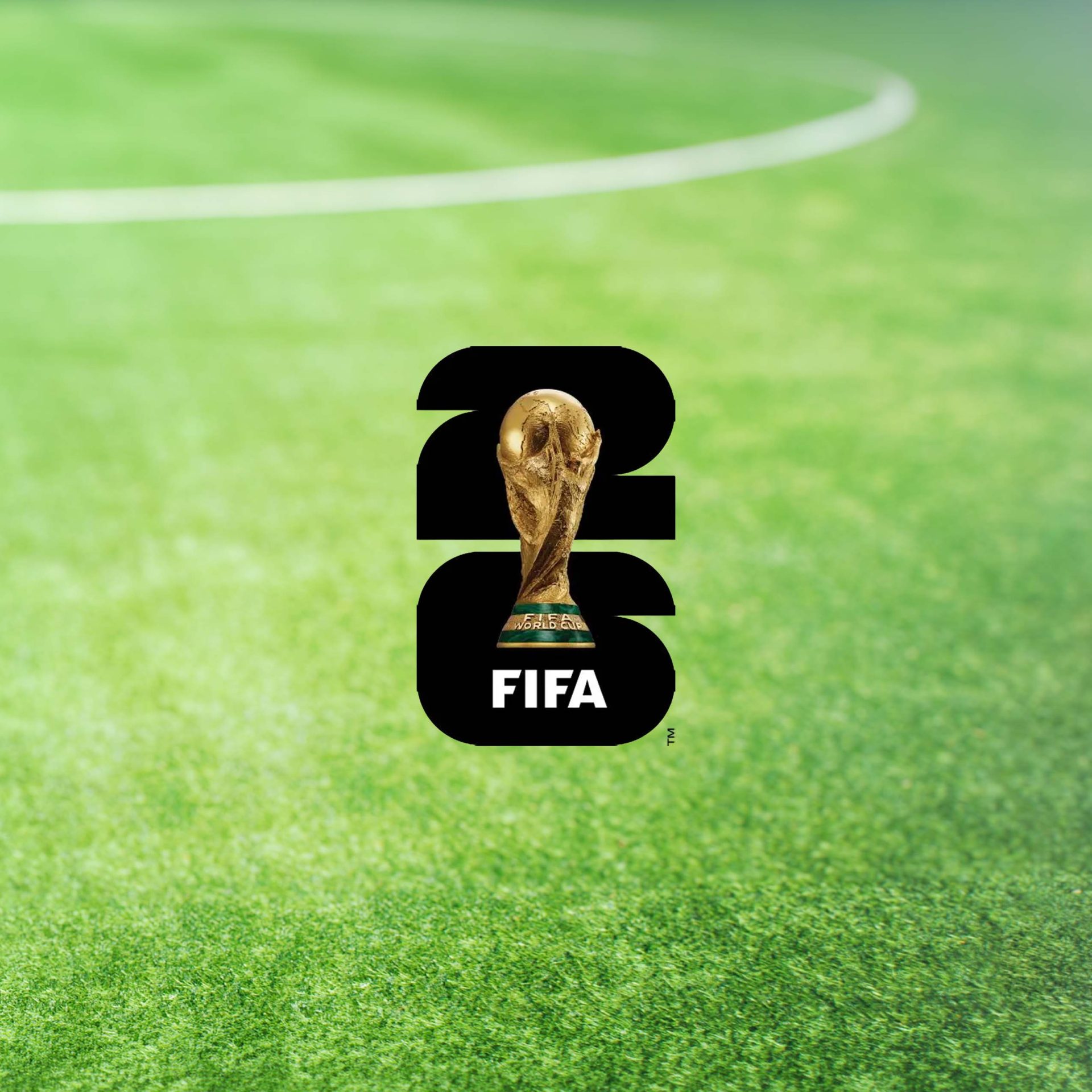
The “WE ARE 26” official emblem takes a bold, minimalist approach to World Cup branding. For the first time in history, the logo features a hyper-realistic image of the actual FIFA World Cup Trophy layered over a thick, black “26.”
Designed as a “blank canvas,” the base black-and-white look is customized into 16 vibrant color palettes, allowing each host city to showcase its unique local culture.
Completing the design is the official slogan “WE ARE 26,” which serves as a powerful rallying cry for the three host nations to welcome the world together.
The Official Song: “Lighter”
FIFA has shifted its strategy this year, releasing an official album rather than just one single song. However, the lead anthem that will dominate the airwaves is the song “Lighter”.
This song is a collaboration between Jelly Roll (USA), Carín León (Mexico), and produced by Cirkut (Canada). Expect the full album to drop shortly before the opening ceremony, featuring global superstars from Europe, Africa, and South America.
The Official Mascots
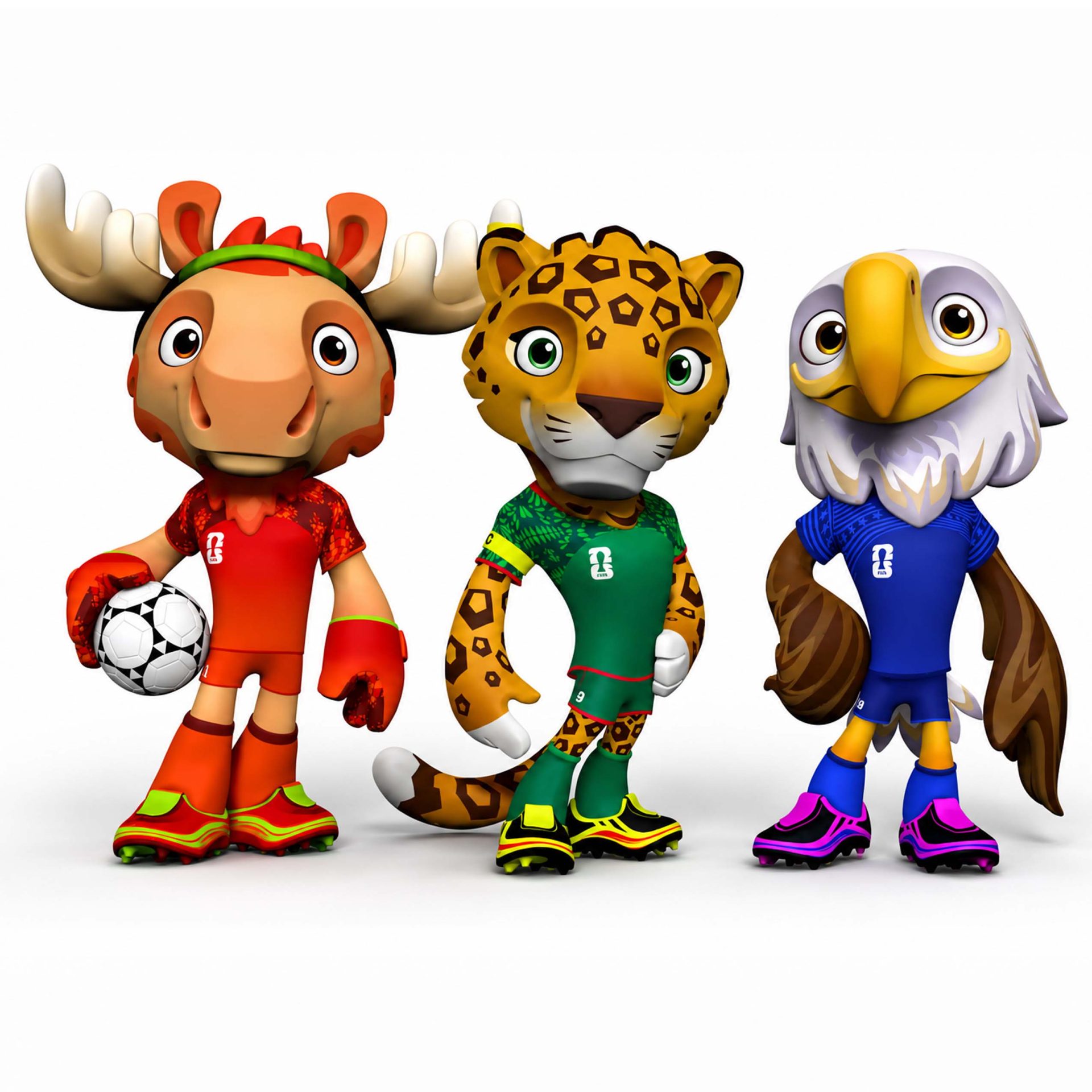
Since this is the first World Cup hosted by three different countries, one mascot simply wasn’t enough. This edition comprises a trio of mascots representing the unique spirit of each host nation.
Here’s the trio:
| Clutch—the “26 Team”- | His name reflects the “clutch” moments in American sports, symbolizing the ability to rise to the occasion under pressure. |
| Maple the Moose (Canada): | Represents the diverse provinces of the nation and “unstoppable flair” of the North |
| Zayu the Jaguar (Mexico) | The name “Zayu” is inspired by concepts of unity and joy, carrying the heart of Mexico’s vibrant football culture. |
Get ready for the world’s biggest stage. Shop Official World Cup kits & Jerseys at Sun and Sand Sports online. From the iconic yellow of Brazil to the classic stripes of Argentina, you can find it all.
PakarPBN
A Private Blog Network (PBN) is a collection of websites that are controlled by a single individual or organization and used primarily to build backlinks to a “money site” in order to influence its ranking in search engines such as Google. The core idea behind a PBN is based on the importance of backlinks in Google’s ranking algorithm. Since Google views backlinks as signals of authority and trust, some website owners attempt to artificially create these signals through a controlled network of sites.
In a typical PBN setup, the owner acquires expired or aged domains that already have existing authority, backlinks, and history. These domains are rebuilt with new content and hosted separately, often using different IP addresses, hosting providers, themes, and ownership details to make them appear unrelated. Within the content published on these sites, links are strategically placed that point to the main website the owner wants to rank higher. By doing this, the owner attempts to pass link equity (also known as “link juice”) from the PBN sites to the target website.
The purpose of a PBN is to give the impression that the target website is naturally earning links from multiple independent sources. If done effectively, this can temporarily improve keyword rankings, increase organic visibility, and drive more traffic from search results.